
Can I Handle My Parent’s Bexar County Probate if I Live Outside Texas?
You can generally serve as an out-of-state executor of your parent’s estate in Bexar County if you meet the legal requirements. Living in another state does not, by itself, prevent you from serving. You must appoint a Texas resident agent to accept service of process, file that appointment with the court, and otherwise qualify for the position.
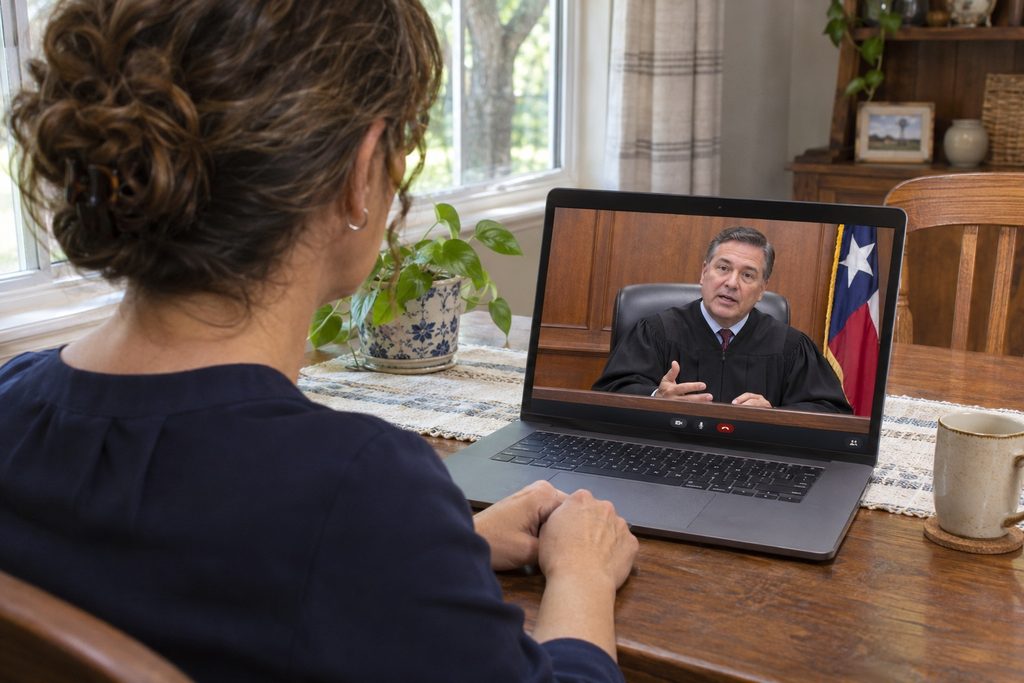
Much of the legal work can often be coordinated through a Texas probate attorney without repeated trips to San Antonio. Depending on the assigned court and the circumstances, you may also attend an uncontested hearing remotely. However, managing a house, collecting belongings, or satisfying a financial institution’s requirements may require local assistance or a visit.
Can an Out-of-State Executor Handle Probate in Bexar County?
If your parent’s will names you as executor, your residence outside Texas does not automatically require the family to select someone else.
The court must still determine whether you qualify. Your attorney should review the will, confirm your willingness to serve, and address the requirements that apply to a nonresident representative.
Being named executor does not immediately authorize you to access estate accounts or sell estate property. The court must appoint you, and you must complete the qualification requirements before the clerk issues letters testamentary.
A local sibling or other relative does not automatically replace you simply because they live closer to the courthouse. If there is a disagreement about the appointment, tell your attorney before filing.
Does an Out-of-State Executor Need a Texas Resident Agent?
A resident agent is a person or entity in Texas designated to accept service of process in actions or proceedings concerning the estate. Service of process involves the formal delivery of legal papers.
Under Section 304.003 of the Texas Estates Code, a nonresident seeking to serve must appoint a resident agent and have the appointment filed with the court. Your attorney can prepare the appropriate designation and discuss who will serve.
The resident agent does not become the executor or receive authority to manage estate property merely by accepting that role. You remain responsible for performing your duties as executor.
An attorney may agree to serve as resident agent, but you should confirm that arrangement rather than assume hiring the attorney automatically completes the designation.
Do My Parent’s Probate Proceedings Belong in Bexar County?
For a parent who lived in Texas, probate venue generally depends on the county of the parent’s domicile or fixed residence. Your own address does not determine where to file.
If your parent had a domicile or fixed residence in Bexar County, the proceeding will generally belong there even if you live in another state. Conversely, a San Antonio bank account or death in a San Antonio hospital does not necessarily establish Bexar County as the proper venue.
Tell your attorney if your parent recently moved, lived in a care facility, maintained homes in multiple states, or owned property outside Texas. Those facts may affect the appropriate proceedings.
If your parent also lived outside Texas but owned Bexar County property, the attorney should evaluate that situation separately. The process may differ from administering the estate of a Texas resident.
Do I Need a Texas Probate Attorney?
An applicant seeking letters testamentary in Bexar County must have an attorney unless the applicant is themselves licensed to practice law in Texas. Serving as executor involves representing interests beyond your own, including those of beneficiaries and creditors.
Bexar County’s published guidance requires applicants seeking letters testamentary to have legal representation. Being the sole beneficiary or having the family’s agreement does not allow a nonlawyer to represent the estate in that proceeding.
A Texas probate attorney can review the will, prepare the application, arrange required notice, coordinate the hearing, and advise you about qualification and administration.
For an out-of-state executor, the attorney also provides a local point of contact for court requirements and procedural questions.
Must an Out-of-State Executor Travel to San Antonio?
You may be able to attend an uncontested probate hearing remotely. The answer depends on the assigned court, its current procedures, and the particular proceeding.
For example, Bexar County Probate Court Number Two’s published guidance states that the court offers remote hearings for most uncontested matters. Probate Court Number One also publishes procedures allowing uncontested hearings by Zoom.
Your attorney should confirm the arrangements before you purchase airfare or assume that an appearance will be remote. Contested matters and unusual circumstances may require different arrangements.
If you attend remotely, prepare as you would for an in-person hearing. Use a quiet location, reliable internet, and a working camera and microphone. San Antonio is on Central Time. Confirm the hearing time in your own time zone and account for any daylight saving time difference.
Can I Complete the Qualification Documents from Another State?
You generally do not need to be physically inside Texas solely to complete the required executor’s oath or authorized declaration.
Texas law permits an oath made elsewhere in the United States to be administered by an appropriate official, including a notary public. The Estates Code also provides an authorized declaration option. Your attorney should supply the correct document and instructions.
If a bond is required, it must also be arranged, filed, and approved as required before qualification is complete.
Do not assume an electronic signature will satisfy every document requirement. Ask which documents require notarization, an original signature, or delivery of the original.
If you live outside the United States, tell your attorney early so notarization, document delivery, and scheduling can be addressed.
What Documents Should I Send My Attorney?
Start with the documents and information needed to evaluate the estate:
- The original will and any codicils. Follow the attorney’s instructions for secure delivery and keep a copy.
- A death certificate, if available.
- Your contact information and identification information requested for the application.
- Beneficiary and family information.
- A preliminary list of assets and debts.
- Deeds, account statements, and available beneficiary designations.
- Trust documents or marital property agreements, if relevant.
- Written requests from banks or other institutions.
Your attorney may begin reviewing scanned documents, but electronic filing does not eliminate the need to handle the original will properly.
Explain any urgent issue, such as an uninsured house, pending sale, threatened foreclosure, or person removing property.
How Does an Out-of-State Executor Obtain Letters Testamentary?
The basic process is generally the same as for a Texas resident, with the additional resident-agent requirement:
- Your attorney reviews the will and determines the appropriate procedure.
- Your attorney prepares the Texas resident-agent designation and ensures that the appointment is filed with the court before you seek appointment.
- The application is filed in the proper court, and required citation is issued and served.
- The court considers the application and supporting proof.
- After appointment, you take and file the required oath or make, sign, and file an authorized declaration. If required, you also file a bond and obtain the judge’s approval.
- The clerk issues letters testamentary after you qualify and satisfy the applicable requirements.
Letters testamentary provide official evidence of your appointment and qualification. Banks and other institutions commonly request them before permitting transactions on the estate’s behalf.
Can I Handle Estate Bank Accounts Remotely?
An out-of-state executor can often coordinate account collection and estate banking from another state, but the institution’s requirements matter.
Before arranging travel, obtain a written list of the documents the bank needs. Those may include letters testamentary, identification, certified court records, and an Employer Identification Number (EIN) for an estate account.
Ask whether the bank permits the necessary steps by mail, electronically, or through a branch near your home. Your attorney can help address questions about your authority, but cannot guarantee that every institution will complete every transaction remotely.
Keep estate funds separate from personal funds. Your location does not change your responsibility to preserve statements, document transactions, and use estate money only for appropriate purposes.
What if My Parent Owned a House in San Antonio?
A house often creates the greatest practical challenge for an out-of-state executor. Even when the legal work occurs remotely, someone may need to inspect the property, address maintenance, and coordinate access.
Consider arrangements for:
- Securing the house and documenting its condition.
- Confirming appropriate insurance coverage, including any vacancy requirements.
- Paying necessary property expenses.
- Caring for pets and preserving personal belongings.
- Arranging repairs, cleaning, or a sale when appropriate.
A trusted local person or professional may assist with specific tasks. That assistance does not give the helper unrestricted authority to remove property, make distributions, or sign for the estate.
Before listing or selling the house, have your attorney review the will, ownership, and your authority. Ask the title company early how an out-of-state seller may complete the closing documents.
Can a Local Relative Handle Everything for Me?
A local relative can help with appropriate practical tasks, but serving as executor carries responsibilities that remain yours.
Document what the person may do, keep records of expenses, and establish how you will review significant decisions. Avoid informal arrangements that leave no record of who removed belongings or received money.
If you cannot undertake the role, tell your attorney before accepting the appointment. The will may name an alternate, or another appointment procedure may be available.
Living outside Texas is a logistical issue; accepting an appointment you cannot responsibly perform is a different concern.
What if My Parent Did Not Leave a Will?
An out-of-state family member may also qualify to serve as an administrator, subject to appointment priorities, the resident-agent requirement, and other qualifications.
The estate may need a judicial determination of heirship to establish who inherits. If someone needs authority to collect assets and address obligations, the family may also seek an administrator’s appointment.
Family agreement can simplify the matter, but it does not eliminate required proof, notices, or other procedures.
Your attorney should first determine whether administration is necessary and whether an independent administration or another available procedure fits the estate.
Does Living Outside Texas Increase Probate Costs?
Residence outside Texas does not automatically turn an uncontested probate into a complicated case. However, distance can create expenses for document delivery, property management, travel, or additional coordination.
Clear records and early planning can help. Identify which tasks you can perform remotely, which require local assistance, and what the attorney’s services include.
Your responsibilities as an out-of-state executor remain the same: protect estate property, address applicable obligations, maintain records, and distribute assets appropriately. Saving a trip should not come at the expense of completing a required task.
When Should I Start?
Contact a Texas probate attorney before waiting for an opportunity to travel. The attorney can often review documents and begin planning while you remain at home.
Texas generally requires presenting a will for probate within four years after death. Delays can also complicate access to records, insurance, property maintenance, and account transfers.
If you previously handled your parent’s finances under a power of attorney, explain that to the attorney. That authority generally ends at death and does not replace an executor’s or administrator’s appointment.
Help for an Out-of-State Executor in Bexar County
The Aldrich Law Firm, PLLC helps families probate wills and administer estates in San Antonio and Bexar County, including matters involving representatives who live outside Texas.
We can review your parent’s documents, address the resident-agent requirement, explain the assigned court’s hearing procedures, and help plan the work that can occur remotely. Contact our San Antonio office to discuss your parent’s estate and the next steps.